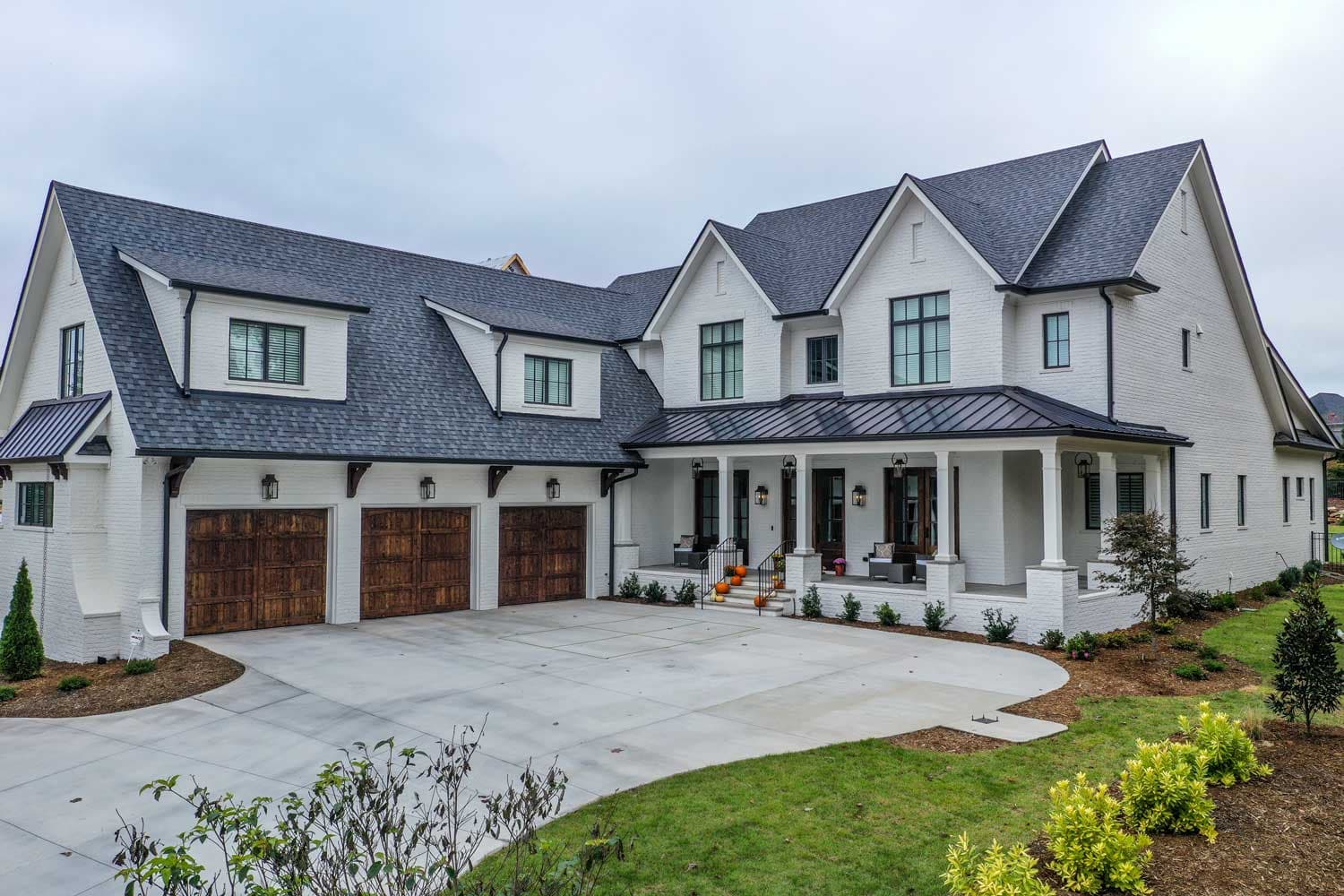
Custom Home Building in Hampton, VA
Looking for a dependable custom homes contractor in Hampton? O’Toole Construction provides professional custom home building services throughout Hampton and the greater Hampton Roads area. Our dedicated crews bring consistent quality, reliable scheduling, and a commitment to doing the job right the first time.
What We Deliver — Custom Homes in Hampton
Ground-up custom homes built to your plans and your standard — one accountable team from foundation and framing through finish, with QA discipline at every stage.
Why Choose O’Toole for Custom Homes in Hampton
When you choose O’Toole Construction for custom homes in Hampton, you're choosing a company that invests in its people and holds every crew member to the same high standards. Our primarily in-house workforce means you get consistent crews who know your project — not a rotating cast of unknown subcontractors. Combined with our quality-first culture, Day 1 benefits for employees, and fast punch response, we deliver the reliability that Hampton builders and homeowners deserve.
Dedicated In-House Crews
Our core workforce is W-2 employees — not a revolving door of unknown subcontractors. Every crew member, whether in-house or a vetted partner, is held to the same quality and safety standards.
Quality-First Culture
We schedule QA time as real work, not an afterthought. Checklists, inspections, and a measure-twice mindset mean fewer callbacks and faster close-outs.
Day 1 Benefits
We invest in our people from the start — health coverage on Day 1, 401(k) after 90 days, and total compensation in the top 10% of the local market. Better-treated crews deliver better work.
Respectful Jobsite Culture
No yelling, no belittling. Professional, respectful communication on every site. Our crews take pride in their conduct and their craft.
Custom Homes Services in Hampton, VA
Serving Hampton's residential construction community with reliable, quality-focused trade work.
About Hampton
Hampton's residential market blends historic preservation with new development. From waterfront properties along the Chesapeake Bay to new construction in the Coliseum Central and Wythe areas, the city needs trade contractors who bring both skill and reliability. Hampton's proximity to military installations — including Langley Air Force Base and Fort Monroe — drives consistent housing demand.
With a population of 135,000+ residents, Hampton is a key market for O’Toole Construction’s custom home building services. Our crews are familiar with local building codes, inspection requirements, and the specific needs of Hampton builders and homeowners.
Custom Homes in Hampton: Local Requirements
Hampton has a constraint on new home construction that none of its neighbours share, and it comes from the air rather than the ground. Joint Base Langley-Eustis sits inside the city, and in August 2010 Hampton and the base adopted a Joint Land Use Study — a set of strategies for keeping the city's development plans and the base's flying mission compatible with each other. The city then created new zoning districts tied to the base's clear zone and accident potential zones, the corridors where an aircraft accident is statistically most likely, with the explicit aim of holding down high-density development in them. Hampton also mapped noise zones, and new residential construction inside them carries noise attenuation requirements under the Virginia Uniform Statewide Building Code that scale with the noise level. For a custom home this is not a formality to be handled at permit time. Attenuation is achieved through the wall and roof assemblies, the glazing, and how the mechanical ventilation is designed, which means it belongs in the drawings from the start. A 2018 addendum to the study extended it to sea level rise and flooding, so the same document now touches both of the city's defining site conditions. Whether a specific parcel falls in a noise zone or an accident potential zone is a question for Hampton Planning and Zoning, and it is worth asking before a lot is bought rather than after.
The second Hampton-specific fact follows from the city being effectively built out. There is very little raw land left inside the city limits, so a custom home in Hampton is usually an infill lot, a teardown and rebuild, or a rebuild of a house that already stands. That makes one rule far more consequential here than it would be in Suffolk or southern Chesapeake: Hampton requires that all proposed development in the 100-year floodplain be reviewed and permitted under the city's Floodplain Zone District Ordinance, and within that ordinance sits the substantial improvement test. If the cost of reconstruction, rehabilitation, an addition, or other improvements to an existing building equals or exceeds 50 percent of the building's market value, the building has to meet the same construction requirements as a new building. In a low-lying, largely floodplain city where most custom work starts with a house already on the lot, that single threshold is what decides whether a project is a renovation or a new build in the code's eyes — including elevation.
The awkward part of the 50 percent rule is that it is measured against market value, not against the owner's intentions or the character of the work. A deep whole-house rebuild in Buckroe, Fox Hill, Grandview, Phoebus, or along the Chesapeake Avenue and Salt Ponds frontages can cross the threshold well before it feels like new construction, at which point elevation and flood-resistant construction below the flood level stop being optional. The honest way to run a Hampton project is to establish the flood zone, the base flood elevation, and the building's market value early, then decide deliberately which side of the line the scope sits on — because a project that lands just over it and was not planned for it is the expensive outcome. Two other checks belong in the same early pass: Hampton's Chesapeake Bay Preservation Overlay, where the published maps are a planning tool only and the actual Resource Protection Area boundary has to be established on the specific site, and the city's own permit path through the Development Services Center on Lincoln Street. Requirements change, so confirm current ones with the city before scope is fixed.
Our Custom Homes Process
Every project follows a structured process designed for quality, accountability, and clean handoffs.
- 1
Pre-construction planning, budgeting, and plan review
- 2
Site prep, foundation, and framing
- 3
Dry-in — roofing, windows, doors, and siding
- 4
Mechanical rough-ins and inspections
- 5
Interior finishes and fixtures
- 6
Final QA walkthrough, punch list, and handover
Custom Homes FAQs — Hampton, VA
Common questions about custom home building services in Hampton.
It can. Following the Joint Land Use Study that Hampton and Joint Base Langley-Eustis adopted in August 2010, the city established zoning districts tied to the base's clear zone and accident potential zones, intended to limit high-density development in the areas where an aircraft accident is most likely. Hampton also mapped noise zones. Whether a particular parcel falls inside any of them is a parcel-level question for Hampton Planning and Zoning, and it is worth confirming before committing to a lot, since the answer can affect both what may be built and how it has to be built.
Hampton's noise zones carry noise attenuation requirements at varying levels, applied to new residential construction through the Virginia Uniform Statewide Building Code. In practice attenuation is delivered by the building envelope — the wall and roof assemblies, the windows and doors and their glazing, and the way mechanical ventilation is designed so the house can stay closed up. That is why it needs to be designed in rather than added later: the requirement lands on the parts of the house that are decided first. The applicable level depends on which noise zone the parcel sits in, which Hampton Planning and Zoning can confirm for a specific address.
Hampton applies the substantial improvement test: if the cost of reconstruction, rehabilitation, an addition, or other improvements to a building equals or exceeds 50 percent of that building's market value, the building must meet the same construction requirements as a new building. Because it is measured against market value rather than against the scope on paper, a deep rebuild can cross the threshold sooner than owners expect — and once it does, new-construction requirements including elevation apply to the whole structure. Establishing the flood zone, the base flood elevation, and the market value early is what keeps that decision deliberate.
Yes. Hampton requires that all proposed development in the 100-year floodplain be reviewed and permitted in compliance with the city's Floodplain Zone District Ordinance. Given how much of Hampton is low-lying and how close the city sits to water on three sides, this applies to a large share of the parcels a custom home might be built on, so it is a first-pass check rather than an edge case. The city's Codes office can confirm the flood zone and the requirements that come with it for a specific address.
Hampton is largely built out, so new construction here is generally an infill lot in an established neighbourhood, or a teardown and rebuild on a lot that already has a house on it. That changes the shape of the project rather than ruling it out: the utilities, the street, and the neighbourhood context already exist, while the constraints that matter most are the parcel's zoning envelope, its flood mapping, whether it falls in a noise or accident potential zone, and — on a rebuild — whether the scope crosses the floodplain substantial improvement threshold.
Hampton publishes mapping for its Chesapeake Bay Preservation Overlay, but the city treats those maps as a planning tool for identifying the approximate location of Resource Protection Areas and Resource Management Areas. Once a project is actually proposed, the exact boundary has to be determined on the site itself by the methods the city establishes. For a custom home that distinction matters, because a buffer line that shifts on site survey can move the buildable envelope after a lot has already been purchased. It belongs in the earliest round of due diligence, alongside the flood zone.
Yes — our custom-home service covers all of Hampton, from Fox Hill, Buckroe, and Grandview on the Chesapeake Bay side to Olde Wythe, Willow Oaks, Northampton, and the Aberdeen and Coliseum Central areas inland. Hampton is largely built out, so most custom work here is an infill lot or a teardown-and-rebuild rather than a new subdivision. Because the city is bounded by water on three sides, we check each parcel against the flood mapping and the Chesapeake Bay Preservation Overlay before the plans are set.
Both. If you already have architectural plans, we'll build from them. If you're starting from an idea, we can help you refine a plan and connect you with design partners before construction begins.
Most custom homes take roughly 9 to 14 months from groundbreaking to move-in, depending on size, complexity, weather, and permitting. We'll give you a realistic schedule during pre-construction and keep you updated at every milestone.
Yes. We manage the entire build as your single point of accountability — scheduling, trade coordination, inspections, and quality control — so you're not left chasing a dozen separate subcontractors.
Yes, O’Toole Construction provides professional custom home building services throughout Hampton, Virginia. We serve Hampton and the greater Hampton Roads area with dedicated crews who deliver consistent quality, reliable scheduling, and the accountability that builders and homeowners expect.
Use our online contact form to tell us about your custom home building project in Hampton. We typically respond within one business day.
More Services in Hampton
Explore other trades O’Toole Construction offers in Hampton, VA.
Custom Homes in Nearby Cities
O’Toole Construction also provides custom home building across Hampton Roads.
Custom Home Building in Virginia Beach
Virginia Beach is the most populous city in Virginia and a major hub for residential construction in the Hampton Roads region.
Custom Home Building in Chesapeake
Chesapeake is one of the fastest-growing cities in Hampton Roads, with significant new residential development.
Custom Home Building in Suffolk
Suffolk is the largest city by area in Virginia, experiencing significant residential growth in its northern corridors.
Custom Home Building in Norfolk
Norfolk is the cultural and economic center of Hampton Roads, with diverse residential construction needs.
Custom Home Building in Newport News
Newport News is a major Hampton Roads city with significant residential construction driven by shipbuilding and military industries.
Ready to Build Something Great?
Whether you’re a builder planning your next phase or a homeowner starting a project, we’re ready to deliver.