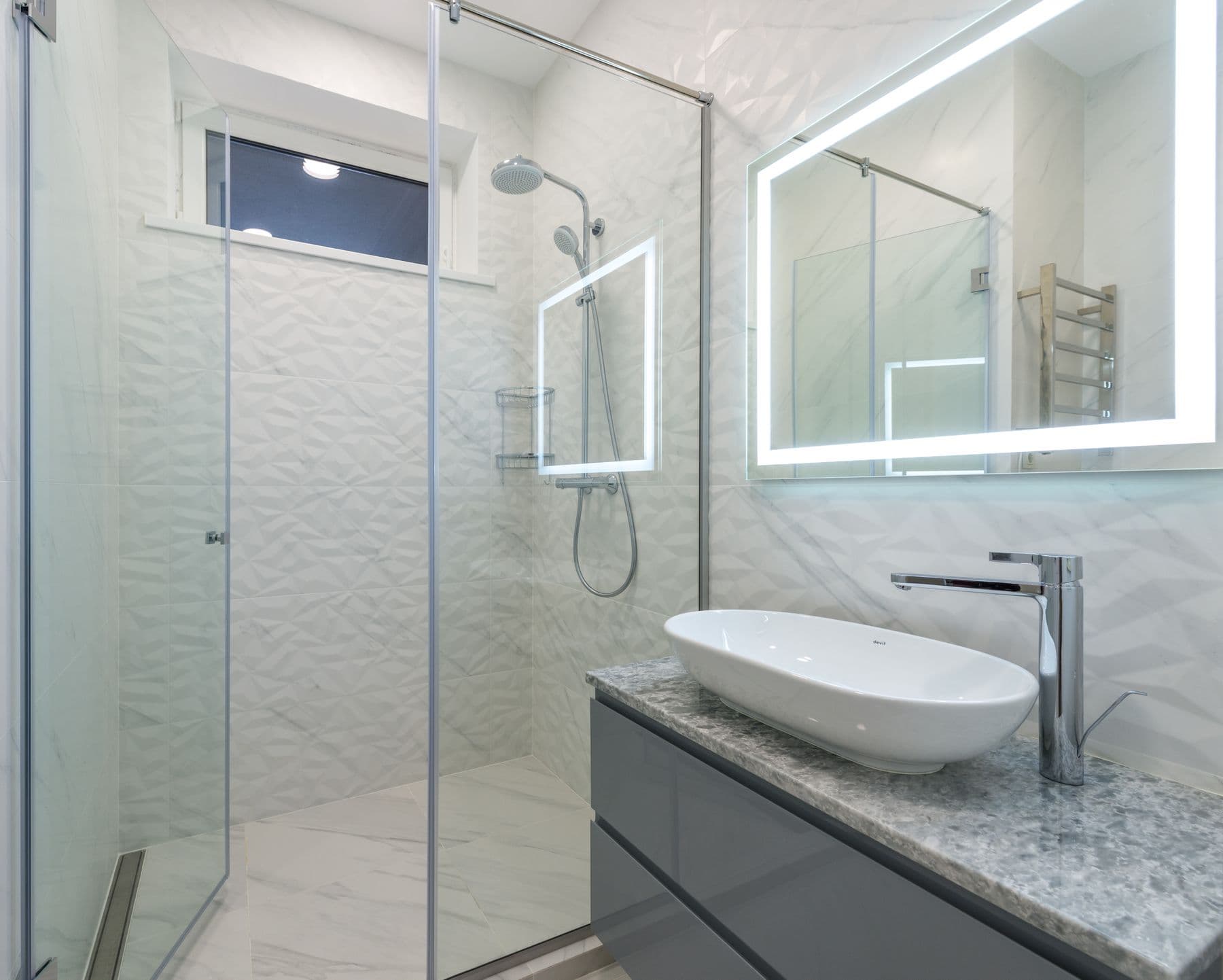
Bathroom Remodels in Hampton, VA
Looking for a dependable bathrooms contractor in Hampton? O’Toole Construction provides professional bathroom remodels services throughout Hampton and the greater Hampton Roads area. Our dedicated crews bring consistent quality, reliable scheduling, and a commitment to doing the job right the first time.
What We Deliver — Bathrooms in Hampton
Bathroom renovations done right where it counts — proper waterproofing, tile, ventilation, and fixtures that look great and hold up for the long haul.
Why Choose O’Toole for Bathrooms in Hampton
When you choose O’Toole Construction for bathrooms in Hampton, you're choosing a company that invests in its people and holds every crew member to the same high standards. Our primarily in-house workforce means you get consistent crews who know your project — not a rotating cast of unknown subcontractors. Combined with our quality-first culture, Day 1 benefits for employees, and fast punch response, we deliver the reliability that Hampton builders and homeowners deserve.
Dedicated In-House Crews
Our core workforce is W-2 employees — not a revolving door of unknown subcontractors. Every crew member, whether in-house or a vetted partner, is held to the same quality and safety standards.
Quality-First Culture
We schedule QA time as real work, not an afterthought. Checklists, inspections, and a measure-twice mindset mean fewer callbacks and faster close-outs.
Day 1 Benefits
We invest in our people from the start — health coverage on Day 1, 401(k) after 90 days, and total compensation in the top 10% of the local market. Better-treated crews deliver better work.
Respectful Jobsite Culture
No yelling, no belittling. Professional, respectful communication on every site. Our crews take pride in their conduct and their craft.
Bathrooms Services in Hampton, VA
Serving Hampton's residential construction community with reliable, quality-focused trade work.
About Hampton
Hampton's residential market blends historic preservation with new development. From waterfront properties along the Chesapeake Bay to new construction in the Coliseum Central and Wythe areas, the city needs trade contractors who bring both skill and reliability. Hampton's proximity to military installations — including Langley Air Force Base and Fort Monroe — drives consistent housing demand.
With a population of 135,000+ residents, Hampton is a key market for O’Toole Construction’s bathroom remodels services. Our crews are familiar with local building codes, inspection requirements, and the specific needs of Hampton builders and homeowners.
Bathrooms in Hampton: Local Requirements
Hampton publishes its own list of what does and does not need a permit, and for a bathroom that list is unusually specific — specific enough that it decides the shape of the project. Replacing a plumbing fixture in the same location is exempt, with one exception the city names outright: a gas water heater still requires a permit. Electrical fixtures are exempt as well. But the same list puts electrical wiring, water lines, and sewers firmly on the permitted side. Read those together and Hampton has effectively drawn the line straight through the middle of a typical bath remodel. Setting a new toilet, tub, or vanity where the old one stood, and changing the vanity light, sit inside the exemptions. Running the branch circuit that modern bathroom receptacles require, repiping the supply, or altering the drain line does not — and neither does moving a fixture, because once it is not in the same location the exemption no longer describes the work. Hampton also exempts window and door replacements of the exact size in single-family dwellings, which is worth knowing when a bath project includes the window. Permits and inspections run through the Development Services Center on Lincoln Street, and the city's 311 line will answer a scope question before it becomes an assumption.
That single distinction — exempt fixtures, permitted wiring — is where most Hampton bath remodels quietly change category, because the electrical is usually the part that has to be brought forward. Current requirements for a bathroom include GFCI protection at the receptacles and a dedicated 20-amp branch circuit serving them, plus restrictions on what may be installed inside the tub and shower zone. The post-war stock in Willow Oaks, Northampton, and Riverdale, and the early-1900s homes in Olde Wythe and Phoebus, very often predate that standard, so a remodel that started as a finishes project turns into a circuit — and sometimes a panel — conversation. Swapping the light fixture on existing wiring is one thing under Hampton's list; pulling a new circuit to the bathroom is another, and it is the second one that a bathroom brought up to current requirements almost always needs. Worth settling before the walls close rather than at the inspection.
Two Hampton conditions sit outside the code book. The first is water, and Hampton is a customer city rather than its own utility: drinking water comes from Newport News Waterworks, the city-owned regional system that supplies the Peninsula. Its supply is chloraminated, and chloramine is harder on rubber and elastomer seals than free chlorine is — so toilet flappers, tank gaskets, and supply-line washers in ordinary rubber stiffen and stop sealing sooner than their nominal life, which is why a new toilet can start running on its own within a year or two. Parts rated for chloraminated water cost no more and are chosen at the counter. The second is elevation. Hampton is low, flat, and surrounded by water on three sides, and Buckroe, Fox Hill, Grandview, Phoebus, and the Salt Ponds and Chesapeake Avenue frontages carry real flood exposure, with tidal nuisance flooding a routine fact rather than a storm event. A ground-floor bathroom in those areas is worth detailing with materials and assemblies that tolerate getting wet — and the state code lets the building official require a permit in a special flood hazard area for work that would otherwise be exempt, which is a live possibility across a lot of this city. We confirm flood mapping, the existing wiring, and the pipe material for the specific address before a layout is set, and homeowners should confirm current requirements with the city, since these lists change.
Our Bathrooms Process
Every project follows a structured process designed for quality, accountability, and clean handoffs.
- 1
Design, scope, and fixture/material selection
- 2
Permitting and scheduling
- 3
Demolition and any framing changes
- 4
Plumbing and electrical rough-ins
- 5
Waterproofing, backing, and tile work
- 6
Fixtures, finishes, final QA, and walkthrough
Bathrooms FAQs — Hampton, VA
Common questions about bathroom remodels services in Hampton.
It depends which parts of the job you mean, and Hampton's own list is unusually clear about it. Replacing a plumbing fixture in the same location is exempt — except a gas water heater, which the city names specifically as still requiring a permit. Electrical fixtures are exempt too. But electrical wiring, water lines, and sewers all require permits, so running a new branch circuit, repiping supply, or altering a drain is permitted work, as is relocating any fixture, since it is then no longer in the same location. Window and door replacements of the exact size in single-family dwellings are exempt. Permits and inspections go through the Development Services Center on Lincoln Street, and the city's 311 line will confirm a specific scope. These lists change, so check current requirements before work starts.
Because the city's list treats the fixture and the wiring as two different things. Electrical fixtures are on Hampton's exempt list; electrical wiring is on the permitted side. Swapping a light for another light on the circuit that is already there is the first case. Adding the GFCI-protected, dedicated 20-amp receptacle circuit that a bathroom is expected to have, or extending wiring to a new location, is the second. In practice that is the line most Hampton bath remodels cross, because the older stock in Olde Wythe, Phoebus, Willow Oaks, and Northampton frequently predates the current bathroom-circuit standard, so bringing the room up to it means new wiring rather than a new fixture.
A gas one does — Hampton calls it out by name as the exception to its same-location plumbing-fixture exemption, and gas appliances and gas lines are separately listed as permitted work. That carve-out exists because a gas appliance brings combustion air, venting, and a fuel connection with it, none of which are part of setting a toilet or a vanity. It is worth confirming the fuel type and the scope with the Development Services Center early, since a water heater is often treated as an afterthought in a bathroom budget and is the one fixture in the room most likely to need a permit on its own.
Usually the water rather than the part. Hampton does not run its own water utility — it is supplied by Newport News Waterworks, the city-owned regional system serving the Peninsula, and that supply is chloraminated. Chloramine is more aggressive toward rubber and elastomer components than free chlorine, so an ordinary flapper hardens, stops sealing against the flush valve, and lets the tank leak slowly into the bowl. The fill valve then cycles to top it up, which is the phantom flush people hear at night. Specifying a flapper rated for chloraminated water, and matching it to the flush valve rather than buying a universal part, is a small decision at remodel time that avoids the problem entirely. Tank gaskets and supply-line washers sit on the same clock.
With the assumption that water can arrive from outside as well as from the fixtures. Hampton is low and flat with water on three sides, and Buckroe, Fox Hill, Grandview, Phoebus, and the Salt Ponds and Chesapeake Avenue frontages see tidal nuisance flooding as a routine occurrence rather than only in storms. That argues for materials and details in a ground-floor bath that tolerate wetting and can dry — and it has a permit consequence too: the state code lets the building official require a permit in a special flood hazard area for work that would otherwise sit inside an exemption. Checking the flood mapping for the specific address before the layout is drawn is the step that keeps both questions from surfacing late.
The pipe and the venting, more often than the layout. Olde Wythe was listed on the National Register in 2012 with more than two thousand contributing buildings, and Phoebus and downtown Hampton carry their own listings, so homes in those areas are frequently early-1900s construction with original cast-iron waste stacks and galvanized supply lines. Once a wall is open, replacing a run is often the honest scope rather than tying a new fixture into a line already at the end of its service life. The other recurring find is an exhaust fan ducted into an attic or soffit instead of to the outdoors — in this climate that moisture condenses in the cavity and feeds mold behind new tile, so the duct usually needs finishing properly as part of the work.
Every part of the city — Olde Wythe, Phoebus, Willow Oaks, Northampton, Farmington, Riverdale, Aberdeen, and the Buckroe, Fox Hill, and Grandview areas on the water, and across Hampton Roads. Hampton exempts a plumbing fixture replaced in the same location from a permit, with gas water heaters called out as an exception, while relocating a fixture or installing new sheetrock is permitted work. In Hampton’s older homes the waterproofing, ventilation, and supply and drain lines usually matter more than the fixtures themselves.
It comes down to the work behind the tile. We use proper shower waterproofing systems and pan detailing, moisture-resistant backing instead of standard drywall in wet areas, and correctly sized exhaust ventilation. Getting that hidden work right is what prevents leaks, rot, and mold down the road.
A typical bathroom remodel runs about 2 to 4 weeks of active work, depending on scope, tile complexity, and whether the layout changes. Custom tile and special-order fixtures can extend that, so we plan material orders up front.
Yes. We can relocate fixtures, change the shower or tub configuration, and adjust the layout — which involves coordinating plumbing and electrical and sometimes framing. We'll review what's feasible given existing plumbing stacks and structure.
Yes, O’Toole Construction provides professional bathroom remodels services throughout Hampton, Virginia. We serve Hampton and the greater Hampton Roads area with dedicated crews who deliver consistent quality, reliable scheduling, and the accountability that builders and homeowners expect.
Use our online contact form to tell us about your bathroom remodels project in Hampton. We typically respond within one business day.
More Services in Hampton
Explore other trades O’Toole Construction offers in Hampton, VA.
Bathrooms in Nearby Cities
O’Toole Construction also provides bathroom remodels across Hampton Roads.
Bathroom Remodels in Virginia Beach
Virginia Beach is the most populous city in Virginia and a major hub for residential construction in the Hampton Roads region.
Bathroom Remodels in Chesapeake
Chesapeake is one of the fastest-growing cities in Hampton Roads, with significant new residential development.
Bathroom Remodels in Suffolk
Suffolk is the largest city by area in Virginia, experiencing significant residential growth in its northern corridors.
Bathroom Remodels in Norfolk
Norfolk is the cultural and economic center of Hampton Roads, with diverse residential construction needs.
Bathroom Remodels in Newport News
Newport News is a major Hampton Roads city with significant residential construction driven by shipbuilding and military industries.
Ready to Build Something Great?
Whether you’re a builder planning your next phase or a homeowner starting a project, we’re ready to deliver.