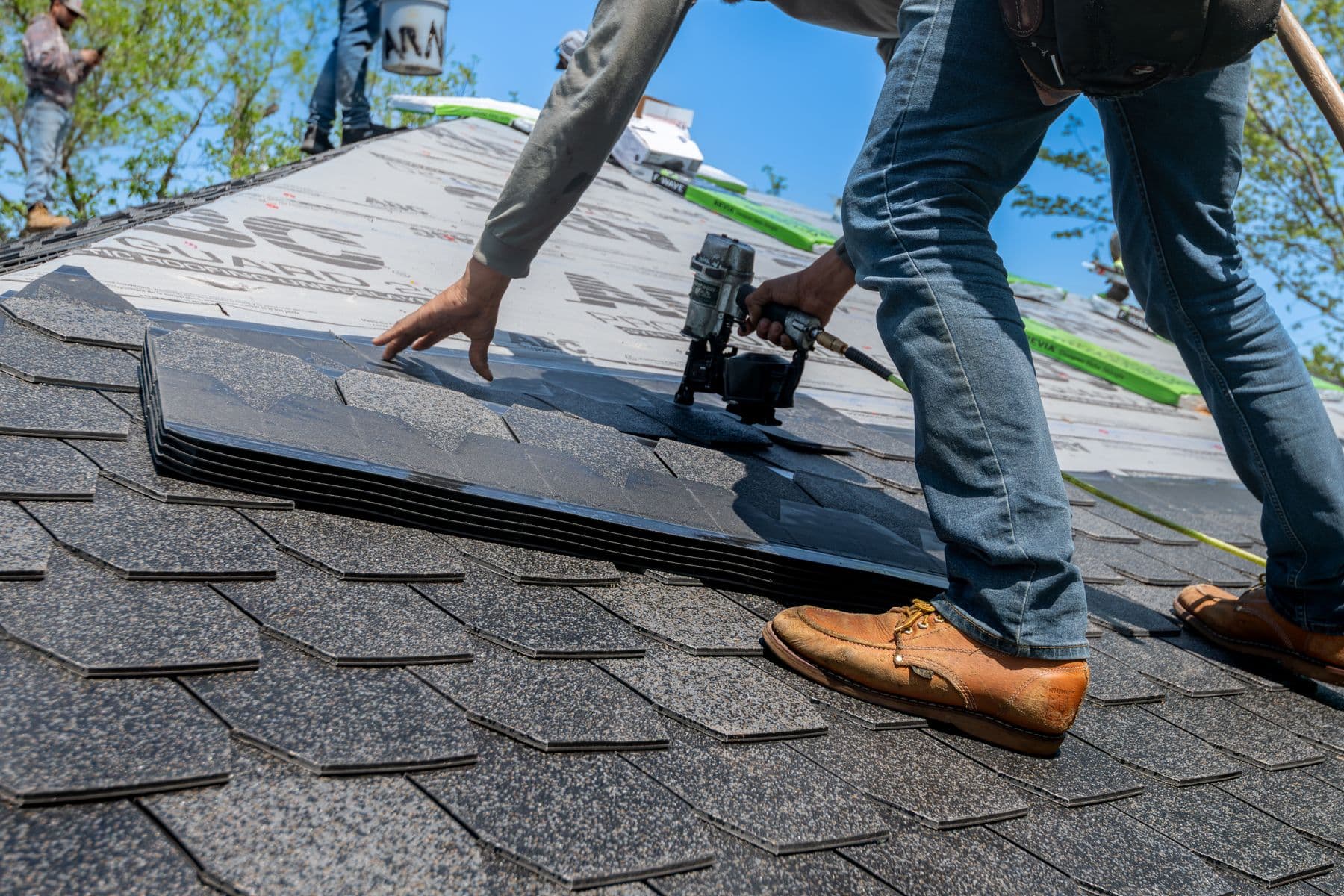
Roofing in Hampton, VA
Looking for a dependable roofing contractor in Hampton? O’Toole Construction provides professional roofing services throughout Hampton and the greater Hampton Roads area. Our dedicated crews bring consistent quality, reliable scheduling, and a commitment to doing the job right the first time.
What We Deliver — Roofing in Hampton
Residential roofing installation and replacement — shingles, underlayment, flashing, and ventilation done right with strict safety discipline.
Why Choose O’Toole for Roofing in Hampton
When you choose O’Toole Construction for roofing in Hampton, you're choosing a company that invests in its people and holds every crew member to the same high standards. Our primarily in-house workforce means you get consistent crews who know your project — not a rotating cast of unknown subcontractors. Combined with our quality-first culture, Day 1 benefits for employees, and fast punch response, we deliver the reliability that Hampton builders and homeowners deserve.
Dedicated In-House Crews
Our core workforce is W-2 employees — not a revolving door of unknown subcontractors. Every crew member, whether in-house or a vetted partner, is held to the same quality and safety standards.
Quality-First Culture
We schedule QA time as real work, not an afterthought. Checklists, inspections, and a measure-twice mindset mean fewer callbacks and faster close-outs.
Day 1 Benefits
We invest in our people from the start — health coverage on Day 1, 401(k) after 90 days, and total compensation in the top 10% of the local market. Better-treated crews deliver better work.
Respectful Jobsite Culture
No yelling, no belittling. Professional, respectful communication on every site. Our crews take pride in their conduct and their craft.
Roofing Services in Hampton, VA
Serving Hampton's residential construction community with reliable, quality-focused trade work.
About Hampton
Hampton's residential market blends historic preservation with new development. From waterfront properties along the Chesapeake Bay to new construction in the Coliseum Central and Wythe areas, the city needs trade contractors who bring both skill and reliability. Hampton's proximity to military installations — including Langley Air Force Base and Fort Monroe — drives consistent housing demand.
With a population of 135,000+ residents, Hampton is a key market for O’Toole Construction’s roofing services. Our crews are familiar with local building codes, inspection requirements, and the specific needs of Hampton builders and homeowners.
Roofing in Hampton: Local Requirements
Hampton handles re-roofs differently from most of its neighbours, and it is the first thing worth understanding about a roof replacement here. The city states plainly that re-roofing and re-siding on residential homes no longer require a building permit — commercial buildings still do. That is a genuine difference from Virginia Beach or Chesapeake, where a full tear-off is permitted and inspected work. It is worth being precise about what the exemption does and does not mean, though: it removes the permit, not the code. The work still has to meet the Virginia Uniform Statewide Building Code and the Virginia Residential Code, and Hampton's Development Services Center is the office to confirm current requirements with before a job starts.
The practical consequence of that exemption is the part most homeowners miss. In a permitted city the exposed decking gets a municipal inspection after the old covering comes off and before the new roof goes on — an independent set of eyes on the sheathing, its fastening, and any rot found underneath. In Hampton, on a residential re-roof, that inspection does not happen, because there is no permit to inspect against. The decking check is entirely a matter of the roofer's own discipline, and a crew that wants to move fast can simply cover bad sheathing and nobody from the city will ever see it. We treat the tear-off as the decision point regardless: the deck gets walked and photographed once it is bare, soft or delaminated sheathing is replaced rather than shingled over, and the homeowner sees what was found before the new covering goes down.
Hampton's geography then sets the specification. The city is a peninsula bounded by the Chesapeake Bay, the Hampton Roads harbour, the Back River, the Hampton River, and Mill Creek, so an unusually large share of it sits close to open water — Buckroe, Fox Hill, Grandview, Phoebus, Fort Monroe, and the waterfront edges of Olde Wythe most of all. Design wind speeds across Hampton Roads run roughly 115–130 mph (3-second gust) depending on the site and the ASCE 7 edition in force, and sites within about 1,500 feet of open water carry the higher exposure category. That calls for a wind-rated (high-wind) asphalt shingle set with the manufacturer's enhanced fastening schedule — more nails per shingle, driven flush in the nail line rather than the standard field pattern — over a sealed or enhanced underlayment that resists the wind-driven rain a coastal blow pushes under the covering, with a properly fastened metal drip edge tying the eaves and rakes together. Exact figures should be confirmed against the current code.
The last variable is the housing stock and the air inside it. Olde Wythe was listed on the National Register in 2012 with more than two thousand contributing buildings, and Phoebus and downtown Hampton carry their own listings, so a re-roof in those neighbourhoods often means plank decking, board gaps, and sometimes more than one layer of old covering — all of which change what the new roof can be fastened to. The post-war ranches and split-levels of Willow Oaks, Northampton, and Riverdale bring a different problem: attic ventilation. In this humid, salt-laden climate a roof needs balanced intake at the eaves or soffits and exhaust near the ridge, and a blocked or lopsided system quietly rots the deck from below long before the shingles wear out. On flood, a roof-only replacement in Hampton's Special Flood Hazard Areas usually falls well under the substantial-improvement threshold on its own, but it can count toward it when bundled into a larger renovation — worth checking early rather than at the end.
Our Roofing Process
Every project follows a structured process designed for quality, accountability, and clean handoffs.
- 1
Roof assessment and scope documentation
- 2
Safety setup — fall protection, anchors, barriers
- 3
Tear-off and deck inspection (replacement jobs)
- 4
Underlayment, ice shield, and flashing installation
- 5
Shingle installation with proper nailing patterns
- 6
Ridge cap, ventilation, and final details
- 7
Cleanup with magnetic nail sweep
Roofing FAQs — Hampton, VA
Common questions about roofing services in Hampton.
For a residential home, no. The City of Hampton states that re-roofing and re-siding on residential homes no longer require a building permit; commercial buildings still do. That is a real difference from Virginia Beach and Chesapeake, where a full tear-off is permitted work. The exemption removes the permit, not the code — the roof still has to meet the Virginia Uniform Statewide Building Code and the Virginia Residential Code. Hampton's Development Services Center is the place to confirm current requirements before work starts.
Only your roofer. In a city that permits re-roofs there is an inspection of the exposed decking after the tear-off and before the new covering goes on. In Hampton there is no permit on a residential re-roof, so that municipal check does not exist and bad sheathing can be covered without anyone from the city seeing it. That is the single biggest reason to care who does the work here. We walk and photograph the bare deck as a fixed step, replace soft or delaminated sheathing rather than shingling over it, and show the homeowner what was found before the new roof goes down.
Hampton is a peninsula, so Buckroe, Fox Hill, Grandview, Phoebus, and the waterfront edges of Olde Wythe sit close to open water and carry a higher wind exposure than the inland parts of the city. Design wind speeds across Hampton Roads run roughly 115–130 mph (3-second gust) depending on the site and the ASCE 7 edition in force. The answer is a wind-rated (high-wind) shingle installed to the manufacturer's enhanced fastening schedule, a sealed or enhanced underlayment beneath it to hold out wind-driven rain, and a properly fastened drip edge at the eaves and rakes. Exact nailing and underlayment figures are confirmed against the current code.
Surprises under the shingles, more often than not. Olde Wythe was listed on the National Register in 2012 with more than two thousand contributing buildings, and Phoebus and downtown Hampton carry their own listings, so homes there are frequently early-1900s construction with plank decking, gaps between the boards, and sometimes an extra layer of old covering. Any of those changes what a new roof can be fastened to and can add sheathing work once the deck is bare. If a project in a historic area involves more than a straight re-roof, it is worth checking with Hampton Planning and Zoning about any district review that applies.
Because the climate here is humid and salt-laden, and moisture attacks a roof from the inside out. A roof needs balanced ventilation — intake at the eaves or soffits and exhaust near the ridge — so warm, damp attic air escapes instead of condensing on the underside of the decking. The post-war ranches and split-levels in Willow Oaks, Northampton, and Riverdale are where we see this most: blocked soffits or exhaust with no matching intake, quietly shortening the life of the sheathing and the shingles above it. We size intake and exhaust together so the system actually moves air rather than just looking vented.
Yes, across the whole city — Olde Wythe, Phoebus, Willow Oaks, Northampton, Farmington, Michaels Woods, Riverdale, Aberdeen, and the Buckroe, Fox Hill, and Grandview waterfront, plus the rest of Hampton Roads. Hampton is unusual in the region here: the city states that re-roof permits are no longer required for residential projects, though commercial buildings still need one. The work is still held to the Virginia Residential Code, so every Hampton roof gets a wind-rated covering, the high-wind fastening the code calls for, and balanced attic ventilation.
We specialize in asphalt shingle roofing including 3-tab and architectural (dimensional) shingles. We install all major brands and follow manufacturer specifications to maintain warranty coverage.
Safety is non-negotiable. Every roofing job includes full fall protection systems — harnesses, anchors, roof brackets, and guardrails as applicable. We monitor weather conditions and will stop work rather than put crews at risk.
Yes, we handle both repairs and full replacements. For repairs, we'll assess the damage, provide an honest recommendation on whether repair or replacement makes more sense long-term, and execute whichever path you choose.
Yes, O’Toole Construction provides professional roofing services throughout Hampton, Virginia. We serve Hampton and the greater Hampton Roads area with dedicated crews who deliver consistent quality, reliable scheduling, and the accountability that builders and homeowners expect.
Use our online contact form to tell us about your roofing project in Hampton. We typically respond within one business day.
More Services in Hampton
Explore other trades O’Toole Construction offers in Hampton, VA.
Roofing in Nearby Cities
O’Toole Construction also provides roofing across Hampton Roads.
Roofing in Virginia Beach
Virginia Beach is the most populous city in Virginia and a major hub for residential construction in the Hampton Roads region.
Roofing in Chesapeake
Chesapeake is one of the fastest-growing cities in Hampton Roads, with significant new residential development.
Roofing in Suffolk
Suffolk is the largest city by area in Virginia, experiencing significant residential growth in its northern corridors.
Roofing in Norfolk
Norfolk is the cultural and economic center of Hampton Roads, with diverse residential construction needs.
Roofing in Newport News
Newport News is a major Hampton Roads city with significant residential construction driven by shipbuilding and military industries.
Ready to Build Something Great?
Whether you’re a builder planning your next phase or a homeowner starting a project, we’re ready to deliver.