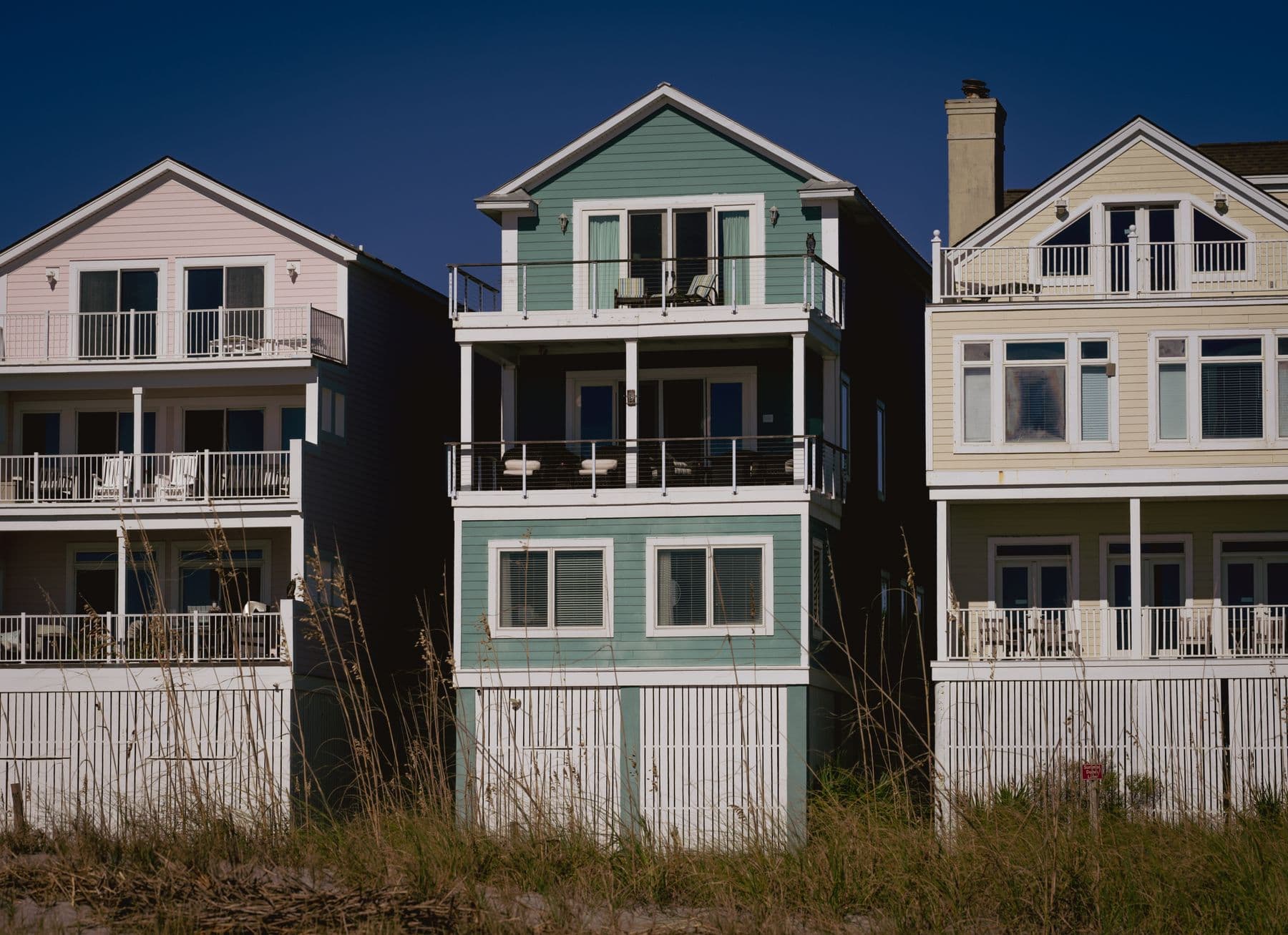
Siding Installation in Norfolk, VA
Looking for a dependable siding contractor in Norfolk? O’Toole Construction provides professional siding installation services throughout Norfolk and the greater Hampton Roads area. Our dedicated crews bring consistent quality, reliable scheduling, and a commitment to doing the job right the first time.
What We Deliver — Siding in Norfolk
Expert siding installation — vinyl, fiber cement, engineered wood, and more — with proper weather barriers and clean, lasting finishes.
Why Choose O’Toole for Siding in Norfolk
When you choose O’Toole Construction for siding in Norfolk, you're choosing a company that invests in its people and holds every crew member to the same high standards. Our primarily in-house workforce means you get consistent crews who know your project — not a rotating cast of unknown subcontractors. Combined with our quality-first culture, Day 1 benefits for employees, and fast punch response, we deliver the reliability that Norfolk builders and homeowners deserve.
Dedicated In-House Crews
Our core workforce is W-2 employees — not a revolving door of unknown subcontractors. Every crew member, whether in-house or a vetted partner, is held to the same quality and safety standards.
Quality-First Culture
We schedule QA time as real work, not an afterthought. Checklists, inspections, and a measure-twice mindset mean fewer callbacks and faster close-outs.
Day 1 Benefits
We invest in our people from the start — health coverage on Day 1, 401(k) after 90 days, and total compensation in the top 10% of the local market. Better-treated crews deliver better work.
Respectful Jobsite Culture
No yelling, no belittling. Professional, respectful communication on every site. Our crews take pride in their conduct and their craft.
Siding Services in Norfolk, VA
Serving Norfolk's residential construction community with reliable, quality-focused trade work.
About Norfolk
Norfolk's residential construction market spans historic renovation in neighborhoods like Ghent and Colonial Place to new development in areas like East Beach. The city's strong military presence, growing downtown, and university communities create steady demand for quality construction trades. Builders here value contractors who can handle both the precision of renovation work and the pace of new construction.
With a population of 235,000+ residents, Norfolk is a key market for O’Toole Construction’s siding installation services. Our crews are familiar with local building codes, inspection requirements, and the specific needs of Norfolk builders and homeowners.
Siding in Norfolk: Local Requirements
Norfolk puts residential siding among the work that does not require a building permit: the city lists vinyl or shake siding on one- and two-family homes alongside same-size replacement windows and residential re-roofing as exempt. That makes a straight re-side one of the simpler projects to start in this city, but the exemption covers the cladding, not whatever is behind it. Norfolk’s housing stock is old enough that stripping the old material regularly exposes rotted sheathing, damaged studs, or failed window framing, and structural repair of that kind is a different scope that goes back through the Development Services Center. We price a re-side on the assumption that the wall will be opened and inspected rather than treating hidden damage as a surprise, because in a city with this much pre-war and mid-century stock it is closer to the norm than the exception.
The historic districts change the calculation entirely. Norfolk has four locally designated ordinance historic districts — Ghent, East Freemason, West Freemason, and the Hodges House district — where exterior alterations require a Certificate of Appropriateness from the Architectural Review Board. Siding is one of the most consequential things that board reviews, because its decisions rest generally on the Secretary of the Interior’s Standards for Rehabilitation and specifically on the city’s Local Design Guidelines and the Pattern Book for Norfolk Neighborhoods. Those Standards are built around retaining historic material rather than covering it, so proposing to wrap original wood siding in a modern cladding is exactly the kind of change that draws the closest scrutiny, and repair of the existing material is the favored route. Norfolk’s designation maps run by parcel, so a house on one block of Ghent can sit inside the district while a neighboring street does not. We confirm a property’s status before any material is specified, and build the board’s published filing deadlines into the schedule rather than discovering them mid-project.
Two physical realities shape how a Norfolk wall is actually built. The first is exposure: design wind speeds run in roughly the 115–130 mph (3-second gust) band depending on the ASCE 7 edition in force and the site, and homes within about 1,500 feet of open water — Willoughby Spit, Ocean View, East Beach, and the Lafayette River edges of Larchmont and Riverview — sit in the higher Exposure D category, where the manufacturer’s high-wind fastener schedule and correct panel engagement matter far more than the material’s brochure. The second is water. Norfolk floods tidally as well as in storms, so the water-resistive barrier, the flashing at windows and doors, and the kick-out flashing where a roof meets a wall have to be integrated as a drainage system rather than installed as separate parts — and on the many homes here sitting low to grade, the bottom course and its starter strip need clearance and drainage detailing that assumes standing water. The city’s assemblies vary enormously behind the cladding: 1890s–1920s masonry and frame in Ghent, early-1900s bungalows in Colonial Place and Riverview, 1940s–50s cottages in Ocean View, and postwar ranches around Norview and Wards Corner, several generations of which were re-clad at least once already.
One caution specific to Norfolk’s older stock. Asbestos-cement shingle siding was a common exterior material on American homes built from roughly the 1920s into the late 1970s, which covers a large share of this city, and it is often hiding under a later layer of vinyl or aluminum. It is not a hazard while it is intact and undisturbed, but cutting, sanding, or breaking it is what releases fibers — so the material should be identified by testing before demolition begins, not assumed either way from the look of it. Virginia regulates asbestos work separately through the Department of Labor and Industry; detached single-family homes and residential buildings of four or fewer units generally sit outside its notification requirements unless the work is being done for commercial or public development purposes, but the safe-handling obligation does not disappear with the paperwork. Where it is present, removal is handled as separate abatement work by a contractor holding the state credential for it, not folded into a siding job. Confirm the current requirements with the Department of Labor and Industry or the city before any pre-1980s wall is opened.
Our Siding Process
Every project follows a structured process designed for quality, accountability, and clean handoffs.
- 1
Scope review and material verification
- 2
Weather barrier inspection and preparation
- 3
Starter course and flashing installation
- 4
Siding installation with ongoing quality checks
- 5
Trim, transitions, and detail completion
- 6
Final walkthrough and cleanup
Siding FAQs — Norfolk, VA
Common questions about siding installation services in Norfolk.
Generally no. Norfolk lists vinyl or shake siding on one- and two-family homes among the work that does not require a building permit, along with same-size replacement windows and residential re-roofing. The exemption covers the cladding itself — if removing the old siding exposes rotted sheathing, damaged framing, or failed window openings, that structural repair is a separate scope that goes through the city’s Development Services Center. Properties in a locally designated historic district need a Certificate of Appropriateness regardless of the permit exemption. Confirm current requirements with the city before work begins.
Not without a Certificate of Appropriateness, and it is one of the harder approvals to get. Norfolk’s four locally designated ordinance historic districts — Ghent, East Freemason, West Freemason, and the Hodges House district — require Architectural Review Board approval for exterior alterations, and the board’s decisions rest on the Secretary of the Interior’s Standards for Rehabilitation together with the city’s Local Design Guidelines and the Pattern Book for Norfolk Neighborhoods. Those Standards are built around retaining original material rather than covering it, so repairing existing wood siding is strongly favored over wrapping it. District boundaries run by parcel, so we confirm a specific address before specifying anything.
It is worth testing rather than guessing. Asbestos-cement shingle siding was widely used on homes built from roughly the 1920s into the late 1970s, which covers a large part of Norfolk’s housing stock, and it is often concealed beneath a later layer of vinyl or aluminum. Intact and undisturbed it is not a hazard; cutting, sanding, or breaking it is what releases fibers, so the material should be identified by testing before any demolition. Virginia regulates asbestos work through the Department of Labor and Industry, and where the material is present its removal is handled as separate abatement work by a contractor holding the state credential for it, rather than as part of a siding installation.
Higher wind exposure and repeated wetting. Design wind speeds around Norfolk run roughly 115–130 mph (3-second gust) depending on the ASCE 7 edition in force, and homes within about 1,500 feet of open water — Willoughby Spit, Ocean View, East Beach, and the Lafayette River edges of Larchmont and Riverview — fall in the higher Exposure D category, which is where the manufacturer’s high-wind fastener schedule and correct panel engagement stop being optional. Because Norfolk also floods tidally rather than only during storms, the water-resistive barrier, window and door flashing, and kick-out flashing have to work together as a drainage system, and walls close to grade need clearance and drainage detailing at the starter course.
Yes, anywhere in the city — Larchmont, Colonial Place, Riverview, Ocean View, East Beach, Norview, and Berkley, and out across Hampton Roads. Every Norfolk wall gets the manufacturer’s high-wind fastener schedule and a properly integrated water-resistive barrier. In the locally designated historic districts, exterior material changes go through Architectural Review Board approval first, so we check that before the siding is specified.
We install vinyl siding, fiber cement (including HardiePlank and similar products), engineered wood siding, and specialty exterior cladding. We follow manufacturer installation guidelines for each product type.
Timeline depends on the size of the home and the siding type. A typical single-family home takes 1-2 weeks for vinyl and 2-3 weeks for fiber cement. We'll confirm a specific timeline when we scope your project.
Yes. Proper weather barrier installation is critical to siding performance. We inspect existing barriers, repair or replace as needed, and ensure all flashing details are correct before siding goes on.
Yes, O’Toole Construction provides professional siding installation services throughout Norfolk, Virginia. We serve Norfolk and the greater Hampton Roads area with dedicated crews who deliver consistent quality, reliable scheduling, and the accountability that builders and homeowners expect.
Use our online contact form to tell us about your siding installation project in Norfolk. We typically respond within one business day.
More Services in Norfolk
Explore other trades O’Toole Construction offers in Norfolk, VA.
Siding in Nearby Cities
O’Toole Construction also provides siding installation across Hampton Roads.
Siding Installation in Virginia Beach
Virginia Beach is the most populous city in Virginia and a major hub for residential construction in the Hampton Roads region.
Siding Installation in Chesapeake
Chesapeake is one of the fastest-growing cities in Hampton Roads, with significant new residential development.
Siding Installation in Suffolk
Suffolk is the largest city by area in Virginia, experiencing significant residential growth in its northern corridors.
Siding Installation in Hampton
Hampton is one of the oldest cities in America, with a mix of historic homes and new residential development.
Siding Installation in Newport News
Newport News is a major Hampton Roads city with significant residential construction driven by shipbuilding and military industries.
Ready to Build Something Great?
Whether you’re a builder planning your next phase or a homeowner starting a project, we’re ready to deliver.