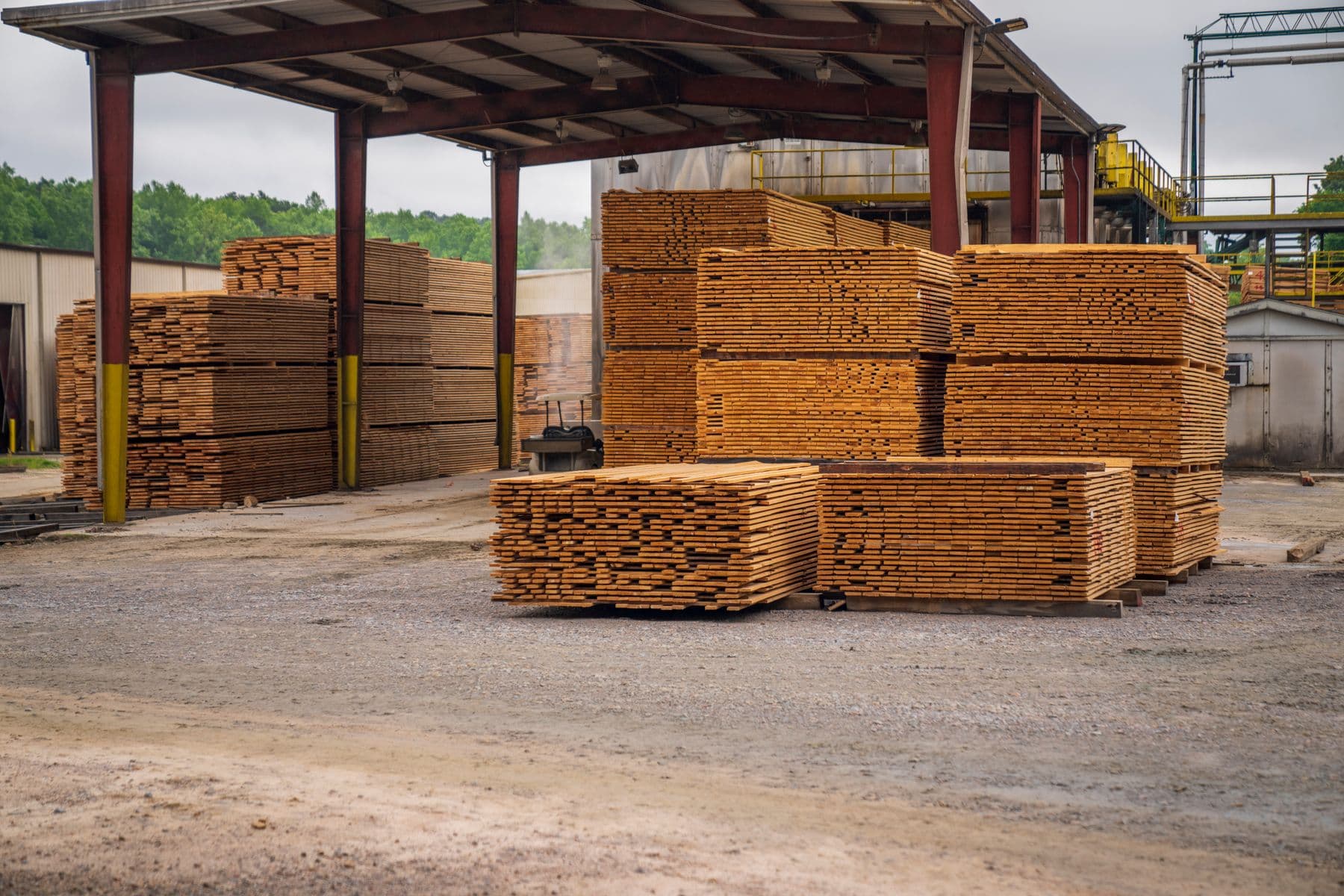
It All Starts With the Lumber
You never see the framing once the house is finished — but you see its quality in every wall, door, cabinet, and tile line for as long as you own the home. That is why we treat the first board we pick up with the same care as the last piece of trim. Start straight, and everything downstream comes out right.
Good Framing Decides Everything Downstream
Crooked lumber is hidden behind the drywall — but its defects telegraph straight through every finish that gets installed on top of it.
Drywall
Bowed and twisted studs telegraph through the sheet as waves, nail pops, and shadowed seams you can see in raking light. A flat wall starts with flat framing.
Trim & Casing
Baseboard, casing, and crown only sit tight against a wall that is plumb and true. Wavy framing leaves gaps that no amount of caulk can hide.
Doors
Jambs set into racked or out-of-plumb openings bind, drift open on their own, or never latch right. Straight king and jack studs make doors that work for decades.
Cabinets
Cabinets hang off the wall and have to land in one flat plane. A wall that bellies out throws off scribes, opens gaps at the wall, and leaves countertops uneven.
Flooring
Crowned or cupped joists create high spots, squeaks, and an uneven subfloor. Tile is the least forgiving of all — any hump cracks grout and breaks the bond.
Tile & Showers
Tile demands a dead-flat, dead-plumb substrate. Any wave in the framing shows up as lippage, crooked grout lines, and surrounds that never sit quite right.
A finish carpenter, tile setter, or cabinet installer can only be as good as the framing lets them be. When we start straight, every trade that follows us is set up to succeed — and you are not paying later to chase down problems that were built in from day one.
We Hand-Pick Every Piece of Lumber
The single biggest lever on a straight build is not a fancier grade — it is sorting. So we sort, board by board, on every project.
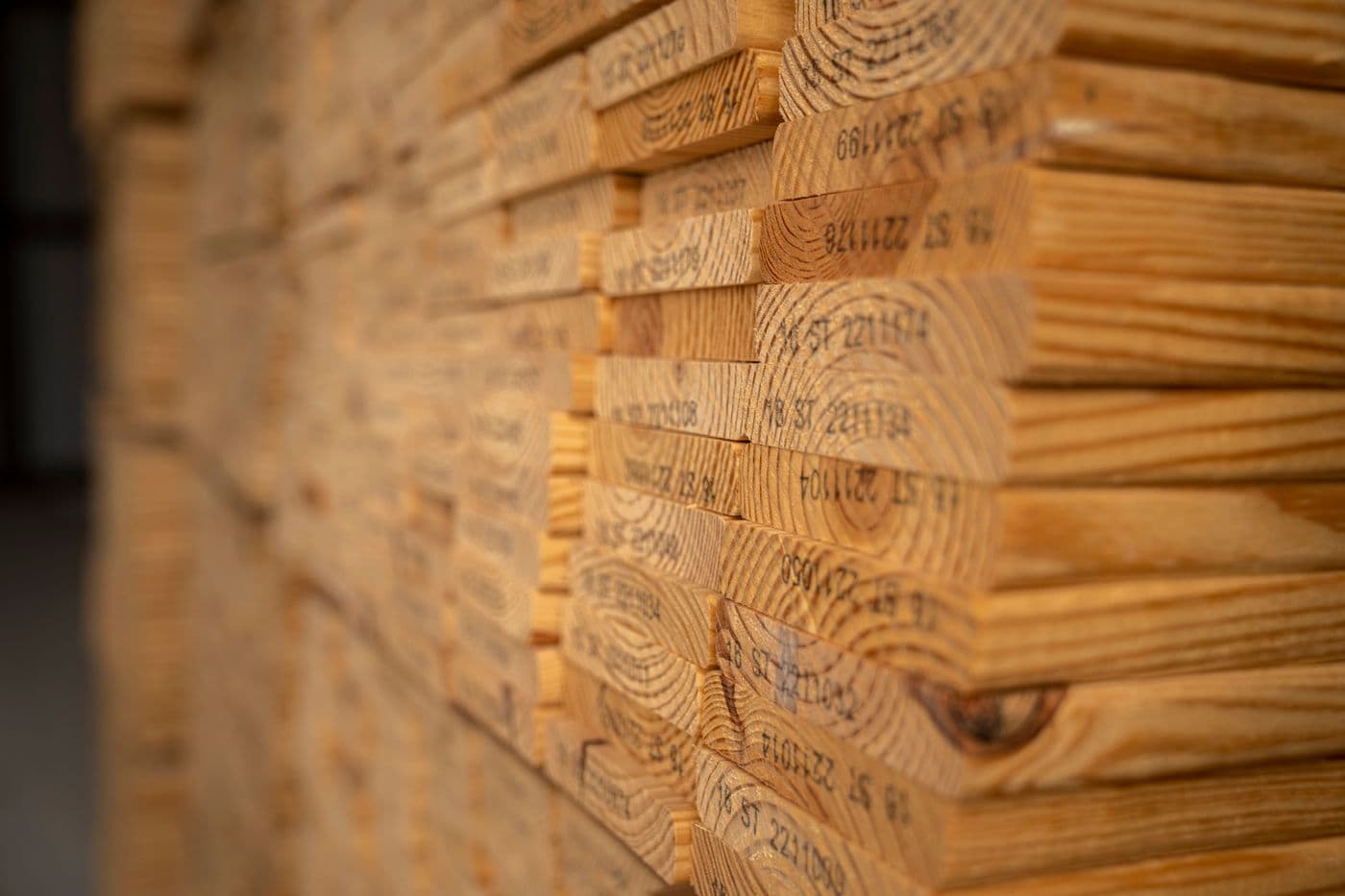
We sight every single board
Each piece is pulled and sighted down the edge and the face before it ever reaches a wall. Anything with crook, bow, twist, or cup gets set aside — we are not building your home out of whatever came off the top of the pile.
The straightest lumber goes where it shows
Our truest boards are reserved for the walls that carry tile, cabinets, doors, and trim. Mild imperfections are used thoughtfully — blocking, cripples, and short cuts — never a finish-critical or load-bearing run.
Every crown is aligned
Each stud and joist is crowned and installed the same direction, so the wall and the floor read flat instead of fighting each other. It is a small discipline that shows up in every finished surface.
We start with better stock
We start with better stock — kept drier, stacked flatter, and stored under cover, not left to twist in an open big-box lot — so the average board is straighter before we ever begin sorting.
Engineered Lumber Where Straightness Is Non-Negotiable
LVL & LSL 2x4 and 2x6 studs in the areas that have to be dead-flat.
For the spots where any movement would show, ordinary lumber is not good enough. We frame those walls with engineered LVL or LSL (TimberStrand) studs — manufactured to stay perfectly straight and stable for the life of the home.
Shower & Tub Walls
LVL or LSL 2x4 and 2x6 studs give a perfectly straight, stable backing so pans, surrounds, and tile stay flat and crack-free for the life of the bathroom.
Kitchen & Cabinet Walls
Engineered studs hold a dead-flat plane, so cabinets hang true, countertops sit level, scribes stay tight, and that expensive run of cabinetry lands exactly where it should.
Long & Critical Runs
Headers, rim joists, and long walls — where any movement would be obvious — get LVL, LSL (TimberStrand), or finger-jointed studs engineered to stay straight as the house ages.
Spent Where It Counts
We do not waste your money putting engineered lumber everywhere. We invest it in the visible, critical pieces where straightness is non-negotiable, and hand-sort premium SPF for the rest.
Kiln-Dried Only. Never Green.
Wet lumber looks straight on the rack — and then twists, cups, and shrinks as it dries inside your walls. We build that risk out from the very first board.
What We Use
- Kiln-dried lumber on every project. We build only with KD and KD-HT (kiln-dried, heat-treated) boards, which hold their shape as they acclimate to your home.
- Stock acclimated to the site. Lumber is let to adjust to site conditions before we frame, so the wall you sign off on is the wall you keep.
- Stored to stay straight. Boards are kept flat, off the ground, supported, and out of the sun and rain — because even good lumber warps if it is stored carelessly.
What We Refuse
We do not frame with green (“S-Green”) boards. They arrive looking perfectly straight, then move as they dry inside a heated, finished house — and that movement is the hidden cause of so many problems that show up months after move-in:
- Nail pops and cracked drywall seams
- Doors that stick, bind, or stop latching
- Gaps opening behind trim, cabinets, and countertops
- Squeaks and uneven floors as joists dry and twist
None of this costs you more in the long run — it costs you less. Starting with straight, dry, hand-picked lumber means fewer callbacks, fewer surprises, and a home that stays true years after the last crew leaves.
Ready to Build Something Great?
Whether you’re a builder planning your next phase or a homeowner starting a project, we’re ready to deliver.